Musculoskeletal Problems Are About More Than Pain
Back pain, knee problems, shoulder injuries, arthritis, tendon disorders, and other musculoskeletal conditions can affect how a person moves long after the initial pain begins.
A painful joint may cause someone to change the way they walk. A back injury may lead to reduced activity. A shoulder problem may cause weakness or limited range of motion.
Over time, the original problem can become connected with:
This is where physical rehabilitation can become an important part of recovery.
The World Health Organization (WHO) identifies musculoskeletal conditions as a major contributor to disability worldwide and includes rehabilitation interventions for conditions such as low back pain, osteoarthritis, rheumatoid arthritis, fractures, and sarcopenia.
What Is Physical Rehabilitation?
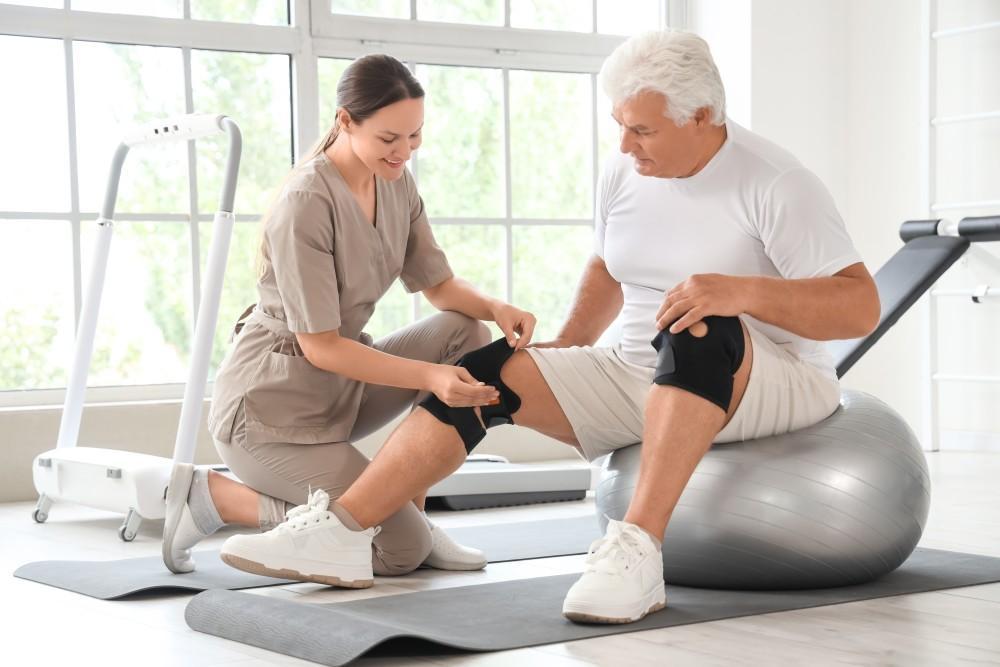
Physical rehabilitation is a structured process designed to help a person improve or regain physical function after an injury, illness, surgery, or musculoskeletal condition.
Depending on the problem, rehabilitation may address:
It is not a single exercise or treatment technique. A rehabilitation program is generally adjusted according to the individual's condition, physical capacity, progress, and goals.
1. Rehabilitation Starts With Understanding the Problem
Effective rehabilitation begins with assessment rather than simply prescribing exercises.
A physical therapist or other qualified clinician may evaluate:
The objective is to understand what is limiting function, not simply where it hurts.
The American Physical Therapy Association (APTA) maintains clinical practice guidelines covering numerous musculoskeletal conditions and emphasizes evidence-based clinical decision-making while noting that guidelines do not replace professional clinical judgment.
2. Exercise Helps Restore Physical Capacity
Structured exercise is one of the central components of rehabilitation.
Depending on the condition, exercises may target:
Strength
To rebuild muscles that have become weak through injury or inactivity.
Mobility
To improve restricted movement around joints and surrounding tissues.
Endurance
To help the body tolerate progressively greater physical demands.
Coordination
To improve how different muscles and joints work together.
The WHO's rehabilitation guidance describes structured exercise programs as planned interventions intended to improve or maintain physical capacity, including muscle and joint strength, function, range of motion, and aerobic capacity.
3. Rehabilitation Addresses More Than the Injured Area
A common misconception is that rehabilitation should focus only on the location of pain.
Consider a knee problem.
The knee may be painful, but rehabilitation may also evaluate:
-
Hip strength
-
Ankle mobility
-
Leg strength
-
Balance
-
Walking mechanics
-
Overall activity level
Similarly, rehabilitation for back problems may involve the hips, trunk, lower extremities, movement patterns, and general physical conditioning.
The body functions as a connected system, so restoring movement may require addressing more than one structure.
4. Progressive Loading Helps the Body Adapt
After an injury or prolonged period of inactivity, returning immediately to previous activity levels may not be appropriate.
Rehabilitation generally uses progressive loading—gradually increasing physical demands as the person's capacity improves.
Progression may involve changes in:
-
Resistance
-
Repetitions
-
Range of motion
-
Exercise complexity
-
Duration
-
Frequency
-
Functional demands
The goal is to challenge the body sufficiently to improve capacity without unnecessarily exceeding what the individual can currently tolerate.
5. Pain Does Not Always Tell the Entire Story
Pain is important, but pain intensity alone does not necessarily measure physical function.
Two people can report similar pain levels while having very different:
-
Strength
-
Mobility
-
Balance
-
Walking ability
-
Exercise tolerance
Conversely, some people may continue to experience discomfort while their strength and functional capacity improve.
This is why rehabilitation often tracks function as well as symptoms.
6. Movement Patterns Can Change After Injury
When something hurts, people naturally modify how they move.
For example, someone with knee pain may:
These adaptations may initially reduce discomfort, but persistent compensation can affect other parts of the body.
Rehabilitation can help identify these movement changes and progressively restore more efficient movement when appropriate.
7. Rehabilitation Can Help After Surgery
Rehabilitation is also commonly incorporated into recovery following procedures such as:
The specific rehabilitation plan depends on the procedure, healing stage, restrictions, and individual progress.
For example, APTA's 2026 clinical practice guideline for total knee arthroplasty addresses physical therapist management before and after knee replacement, reflecting the importance of structured rehabilitation in restoring physical function.
8. Rehabilitation Can Help With Chronic Conditions
Rehabilitation is not limited to acute injuries.
It can also support people managing longer-term conditions such as:
The WHO specifically includes rehabilitation interventions for osteoarthritis, rheumatoid arthritis, low back pain, and sarcopenia in its musculoskeletal rehabilitation framework.
For chronic conditions, the objective may be less about a quick return to a previous state and more about improving function, managing symptoms, and maintaining participation in daily activities.
9. Rehabilitation Can Reduce the Effects of Deconditioning
Reduced activity can create its own problems.
After an injury, a person may become less active because movement is uncomfortable.
That can contribute to:
Less activity → reduced strength → lower endurance → greater difficulty with movement
Rehabilitation helps gradually reintroduce appropriate physical demands.
This can be particularly important after periods of prolonged inactivity, illness, or hospitalization.
10. Progress Should Be Measured Functionally
Improvement is not always reflected by pain scores alone.
A rehabilitation program may monitor changes in:
APTA's clinical practice resources include guidance on using standardized outcome measures to assess physical function, reflecting the broader movement toward measuring what patients can actually do rather than relying exclusively on symptoms.
Rehabilitation Is Not Identical for Every Condition
An exercise that is appropriate for one musculoskeletal condition may not be appropriate for another.
For example, rehabilitation approaches differ depending on whether someone has:
Even people with the same diagnosis may require different approaches based on age, physical capacity, symptoms, medical history, and goals.
This is why individualized assessment matters.
When Rehabilitation May Be Appropriate
A healthcare professional may consider rehabilitation when a musculoskeletal problem is affecting:
-
Walking
-
Strength
-
Range of motion
-
Balance
-
Work activities
-
Exercise
-
Daily activities
-
Quality of life
It may also be considered when someone has completed an acute phase of treatment but has not yet regained normal function.
The appropriate timing depends on the underlying condition and clinical assessment.
When Pain May Require Further Medical Evaluation
Not every musculoskeletal problem should immediately be treated as a rehabilitation issue.
Medical evaluation is particularly important when symptoms are:
-
Severe or rapidly worsening
-
Associated with significant trauma
-
Accompanied by progressive weakness
-
Associated with new numbness
-
Associated with unexplained fever or systemic symptoms
-
Preventing normal function
Sudden neurological symptoms, severe chest pain, significant breathing difficulty, or other emergency symptoms require urgent medical attention rather than routine rehabilitation.
What Makes Rehabilitation Effective?
A useful rehabilitation program generally has several characteristics.
Individualized
Exercises and activities are matched to the person's condition and current ability.
Progressive
The physical challenge changes as capacity improves.
Functional
The program connects exercises to meaningful activities.
Measurable
Progress is assessed using appropriate clinical and functional measures.
Evidence-Informed
Treatment decisions are informed by current evidence, clinical expertise, and the individual's circumstances.
APTA's clinical practice guideline library is specifically designed to support evidence-based physical therapist practice and reduce unwarranted variation in care.
The Role of the Patient Matters Too
Rehabilitation is not limited to time spent in a clinic.
Depending on the condition, progress may also depend on:
-
Completing prescribed exercises
-
Gradually increasing appropriate activity
-
Following movement recommendations
-
Monitoring symptoms
-
Maintaining consistency
The objective is to help patients develop physical capacity that transfers into everyday life—not simply perform exercises during appointments.
A Modern View of Rehabilitation
The role of rehabilitation is expanding beyond simply recovering after an injury.
The WHO describes rehabilitation as an essential health strategy for optimizing functioning and reducing disability. Its recent Southeast Asia rehabilitation framework also emphasizes integrating rehabilitation more effectively into health systems rather than treating it as an isolated service.
This reflects a broader shift toward function-focused healthcare.
Instead of asking only:
“How much does it hurt?”
clinicians increasingly consider:
“What can you do now, what has changed, and what is preventing you from doing more?”
The Bigger Picture
Musculoskeletal recovery is rarely just about making pain disappear.
A successful recovery may involve restoring:
Physical rehabilitation provides a structured way to work toward those goals while adjusting the program as the individual's capacity changes.
Key Takeaway
Physical rehabilitation can play an important role in recovery from musculoskeletal problems by addressing function—not just symptoms.
Through assessment, targeted exercise, progressive loading, movement training, and functional monitoring, rehabilitation can help people regain physical capacity after injury, surgery, illness, or periods of reduced activity.
The appropriate approach depends on the underlying condition and the individual. Rehabilitation is not a universal exercise program; it is a clinical process designed to help a person move toward their best achievable level of function safely and progressively.